Buy momente.eu ?
We are moving the project
momente.eu .
Are you interested in purchasing the domain
momente.eu ?
domain@kv-gmbh.de · 0541-91531010
Buy momente.eu ?
When is the imparfait used?
The imparfait is used in French to describe ongoing or repeated actions in the past, to set the scene or provide background information, to express habitual actions in the past, and to describe physical and emotional states in the past. It is often used in conjunction with the passé composé to provide a more complete picture of past events. The imparfait is also commonly used in storytelling and narration. **
What is the story in French imparfait?
The French imparfait is used to describe ongoing or habitual actions in the past. It sets the scene, describes the background, or provides context for a specific event or action in the past. It is often used to talk about childhood memories, past habits, or to describe a situation or state of being in the past. The imparfait is formed by taking the present tense nous form of the verb, dropping the -ons ending, and adding the imparfait endings (-ais, -ais, -ait, -ions, -iez, -aient). **


Similar search terms for Imparfait
Top-Angebote
Products related to Imparfait:
-
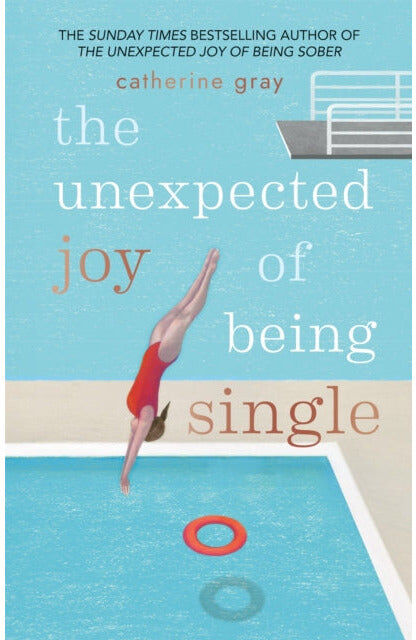
Aster The Unexpected Joy of Being Single: Locating unattached happiness by Catherine GrayHaving a secret single freak-out? Feeling the red, heart-shaped urgency intensify as the years roll on by? Oh hi! You're in the right place. Over half of Brits aged 25-44 are now single. It's become the norm to remain solo until much later in life, given the average marriage ages of 35 (women) and 38 (men). Many of us are choosing never to marry at all.But society, films, song lyrics and our parents are adamant that a happy ending has to be couple-shaped. That we're incomplete without an 'other half'*, like a bisected panto pony. Cue: single sorrow. Dating like it's a job. Spending half our lives waiting for somebody-we-fancy to text us back. Feeling haunted by the terms 'spinster' or 'confirmed bachelor.' Catherine Gray took a whole year off dating to find single satisfaction. She lifted the lid on the reasons behind the global single revolution, explored the bizarre ways cultures single-shame, detached from 'all the good ones are gone!' panic and debunked the myth that married people are much happier. Let's start the reverse brainwash, in order to locate - and luxuriate in - single happiness. Are you in?1,99 £*Shipping: 1,99 £Secure redirect to the provider
-
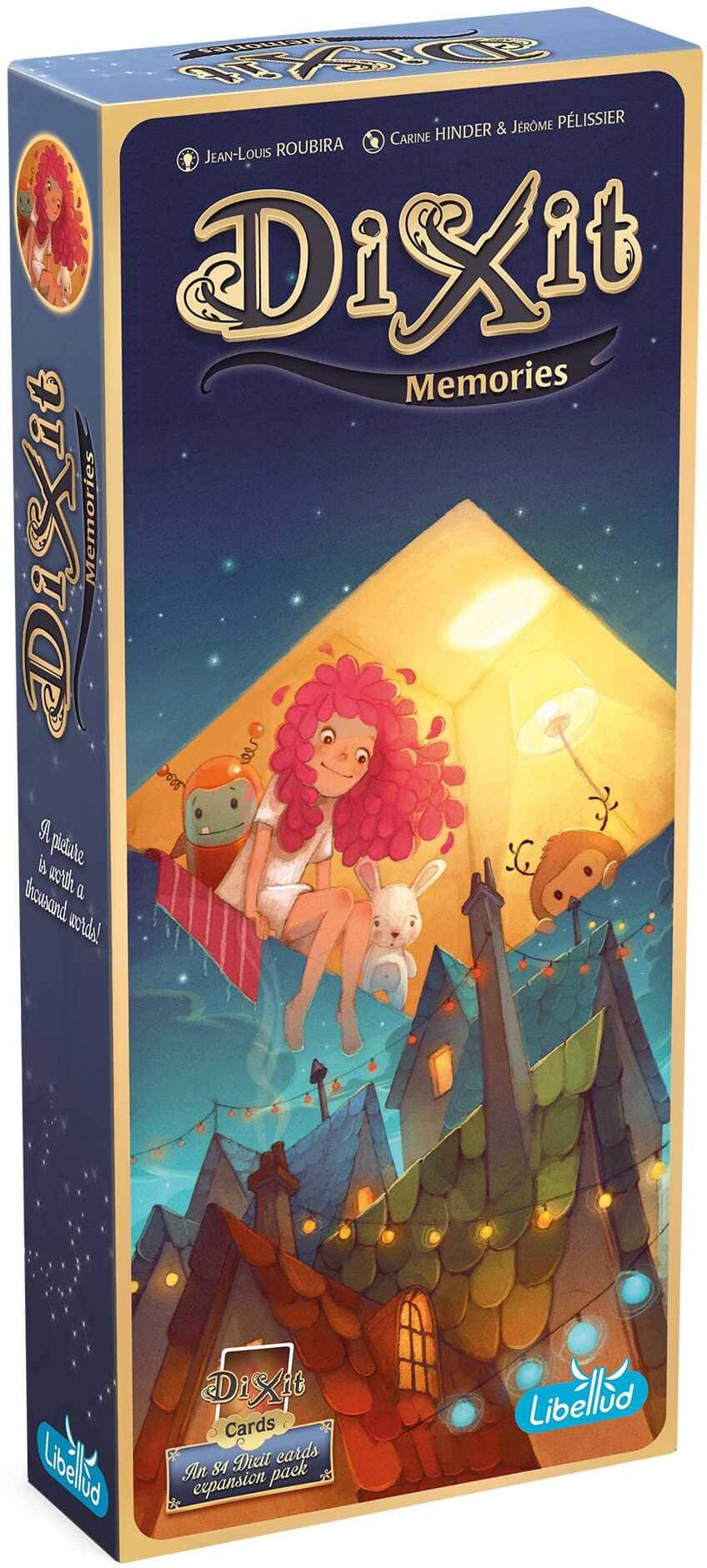
Dixit Expansion 6: Memories - 84 Illustrated Picture Cards for Family and Group Play, Ages 8+, by LibelludDixit Expansion 6: Memories is a set of 84 beautifully illustrated picture cards designed to inspire imaginative clues and unexpected interpretations. When combined with the Dixit base game, these cards create new storytelling possibilities. Players take turns choosing a card and giving a clue, while the other players select cards they think best match it. The aim is to choose a clue that is neither too obvious nor too obscure. This expansion is intended to be used with a Dixit base game and does not replace the core game components. It is suitable for family and group play, encouraging creativity, discussion, and visual interpretation. The cards are new artwork for expanding the Dixit card collection and are compatible with the Dixit base game.16,09 £*Shipping: 3,95 £Secure redirect to the provider
-
Youfap Market Educational Toy, Save The Penguin Ice Tapping Rescue Game, Fun Family Game For Parent Child Bonding Educational Toy, Save The Penguin Ice Tapping Rescue Game, Fun Family Game For Parent Child BondingEngage and Bond with the Save The Penguin Ice Tapping Rescue Game Looking for a fun and educational way to bond with your kids The Save The Penguin Ice Tapping Rescue Game is a perfect choice for quality parentchild bonding time. This interactive...49,97 $*Shipping: 0,00 $Secure redirect to the provider
-
Hardie Grant Books The Spanish Home Kitchen by José Pizarro - Hardback Spanish Cookbook - 80+ Seasonal Recipes & Family Memories - Foodie GiftThe Spanish Home Kitchen by José Pizarro is a cookbook that gathers over 80 seasonal recipes from his family farm in Talaván and from all corners of Spain. This hardback edition combines evocative storytelling with achievable, authentic cooking, making it a valuable addition to any kitchen bookshelf. It's a book for cooks who want real Spanish flavor without the fuss, and for anyone who loves food with heart and history behind it. Chef José Pizarro grew up on a farming family's land in central-western Spain, where meals were built around whatever the season, the garden, and the farmyard provided. In The Spanish Home Kitchen, he returns to that childhood home to retell the recipes passed from his grandmother, to his mother, and eventually to him.19,99 £*Shipping: 2,99 £Secure redirect to the provider


-
What is the difference between Imparfait and passé Composé?
The main difference between Imparfait and passé Composé is the way they are used to describe actions in the past. Imparfait is used to describe ongoing or repeated actions in the past, while passé Composé is used to describe specific actions that were completed in the past. Additionally, Imparfait is often used to set the scene or provide background information, while passé Composé is used to highlight the main events or actions. In terms of formation, Imparfait is formed by using the present tense of the verb as a base and adding specific endings, while passé Composé is formed by using the auxiliary verb "avoir" or "être" with the past participle of the main verb. **
-
What are the irregular verbs in the imparfait tense?
In the imparfait tense, irregular verbs include être (to be), avoir (to have), savoir (to know), vouloir (to want), pouvoir (to be able to), and aller (to go). These verbs have unique conjugations in the imparfait tense and do not follow the regular pattern of regular -er, -ir, or -re verbs. It is important to memorize the irregular conjugations of these verbs to use them correctly in the imparfait tense. **
-
What is the difference between Imparfait and Conditionnel présent?
The Imparfait is used to describe ongoing or repeated actions in the past, while the Conditionnel présent is used to express hypothetical or uncertain actions in the present or future. The Imparfait is used to set the scene or provide background information, while the Conditionnel présent is used to express a condition or consequence. Additionally, the Imparfait is formed by adding specific endings to the root of the verb, while the Conditionnel présent is formed by adding specific endings to the infinitive form of the verb. **
-
How do you translate the French imparfait into German?
To translate the French imparfait into German, you can use the German simple past tense (Präteritum) or the present perfect tense (Perfekt). The choice between the two depends on the context and the specific meaning you want to convey. The simple past tense is more commonly used in written German, while the present perfect tense is more common in spoken German. It's important to pay attention to the verb conjugations and the nuances of each tense to accurately convey the meaning of the imparfait in German. **

What is a task related to the French imparfait tense?
One task related to the French imparfait tense is to describe ongoing or habitual actions in the past. For example, students may be asked to write a paragraph about their daily routine when they were younger using the imparfait tense. Another task could be to narrate a past event or story using the imparfait to set the scene or provide background information. Practicing conjugating regular and irregular verbs in the imparfait form is also a common exercise to reinforce understanding of this past tense. **
Can someone help me with the imparfait and passé composé?
Yes, I can help you with the imparfait and passé composé. The imparfait is used to describe ongoing or repeated actions in the past, while the passé composé is used to describe completed actions in the past. Understanding when to use each tense depends on the context of the sentence and the specific action being described. If you have specific examples or questions, feel free to ask for clarification. **
Top-Angebote
Products related to Imparfait:
-
NEONAIL Let's Make Memories gel nail polish shade Joy In Every Moment 7.2 mlNEONAIL Let's Make Memories, 7.2 ml, Gel and Acrylic Nails for Women, A gorgeous manicure as though you’d just left the nail salon? The NEONAIL Let's Make Memories nail polish lets you achieve it in the comfort of your own home. It coats the surface of the nail with a continuous layer of long-lasting, intense colour with a glossy finish, helping to give your nails a manicured, perfectly groomed look. You can use it to accentuate your nails or perhaps to enhance your outfit and style. So which colour will you choose to make your nails pop? Characteristics: bright, rich colour ensures a high gloss long-lasting covers the nails with a contiguous layer of colour use only with a LED nail lamp How to use: Apply a thin layer of gel polish to the nails - working from the centre to the sides to avoid any excess on the edges. Place the painted nails under the LED or UV lamp for 60 seconds to a few minutes (always follow the included instructions).6,56 £*Shipping: 3,99 £Secure redirect to the provider
-
Aster The Unexpected Joy of Being Single: Locating unattached happiness by Catherine GrayHaving a secret single freak-out? Feeling the red, heart-shaped urgency intensify as the years roll on by? Oh hi! You're in the right place. Over half of Brits aged 25-44 are now single. It's become the norm to remain solo until much later in life, given the average marriage ages of 35 (women) and 38 (men). Many of us are choosing never to marry at all.But society, films, song lyrics and our parents are adamant that a happy ending has to be couple-shaped. That we're incomplete without an 'other half'*, like a bisected panto pony. Cue: single sorrow. Dating like it's a job. Spending half our lives waiting for somebody-we-fancy to text us back. Feeling haunted by the terms 'spinster' or 'confirmed bachelor.' Catherine Gray took a whole year off dating to find single satisfaction. She lifted the lid on the reasons behind the global single revolution, explored the bizarre ways cultures single-shame, detached from 'all the good ones are gone!' panic and debunked the myth that married people are much happier. Let's start the reverse brainwash, in order to locate - and luxuriate in - single happiness. Are you in?1,99 £*Shipping: 1,99 £Secure redirect to the provider
-
Dixit Expansion 6: Memories - 84 Illustrated Picture Cards for Family and Group Play, Ages 8+, by LibelludDixit Expansion 6: Memories is a set of 84 beautifully illustrated picture cards designed to inspire imaginative clues and unexpected interpretations. When combined with the Dixit base game, these cards create new storytelling possibilities. Players take turns choosing a card and giving a clue, while the other players select cards they think best match it. The aim is to choose a clue that is neither too obvious nor too obscure. This expansion is intended to be used with a Dixit base game and does not replace the core game components. It is suitable for family and group play, encouraging creativity, discussion, and visual interpretation. The cards are new artwork for expanding the Dixit card collection and are compatible with the Dixit base game.16,09 £*Shipping: 3,95 £Secure redirect to the provider
-
When is the imparfait used?
The imparfait is used in French to describe ongoing or repeated actions in the past, to set the scene or provide background information, to express habitual actions in the past, and to describe physical and emotional states in the past. It is often used in conjunction with the passé composé to provide a more complete picture of past events. The imparfait is also commonly used in storytelling and narration. **
-
What is the story in French imparfait?
The French imparfait is used to describe ongoing or habitual actions in the past. It sets the scene, describes the background, or provides context for a specific event or action in the past. It is often used to talk about childhood memories, past habits, or to describe a situation or state of being in the past. The imparfait is formed by taking the present tense nous form of the verb, dropping the -ons ending, and adding the imparfait endings (-ais, -ais, -ait, -ions, -iez, -aient). **
-
What is the difference between Imparfait and passé Composé?
The main difference between Imparfait and passé Composé is the way they are used to describe actions in the past. Imparfait is used to describe ongoing or repeated actions in the past, while passé Composé is used to describe specific actions that were completed in the past. Additionally, Imparfait is often used to set the scene or provide background information, while passé Composé is used to highlight the main events or actions. In terms of formation, Imparfait is formed by using the present tense of the verb as a base and adding specific endings, while passé Composé is formed by using the auxiliary verb "avoir" or "être" with the past participle of the main verb. **
-
What are the irregular verbs in the imparfait tense?
In the imparfait tense, irregular verbs include être (to be), avoir (to have), savoir (to know), vouloir (to want), pouvoir (to be able to), and aller (to go). These verbs have unique conjugations in the imparfait tense and do not follow the regular pattern of regular -er, -ir, or -re verbs. It is important to memorize the irregular conjugations of these verbs to use them correctly in the imparfait tense. **
Similar search terms for Imparfait
-
Youfap Market Educational Toy, Save The Penguin Ice Tapping Rescue Game, Fun Family Game For Parent Child Bonding Educational Toy, Save The Penguin Ice Tapping Rescue Game, Fun Family Game For Parent Child BondingEngage and Bond with the Save The Penguin Ice Tapping Rescue Game Looking for a fun and educational way to bond with your kids The Save The Penguin Ice Tapping Rescue Game is a perfect choice for quality parentchild bonding time. This interactive...49,97 $*Shipping: 0,00 $Secure redirect to the provider
-
Hardie Grant Books The Spanish Home Kitchen by José Pizarro - Hardback Spanish Cookbook - 80+ Seasonal Recipes & Family Memories - Foodie GiftThe Spanish Home Kitchen by José Pizarro is a cookbook that gathers over 80 seasonal recipes from his family farm in Talaván and from all corners of Spain. This hardback edition combines evocative storytelling with achievable, authentic cooking, making it a valuable addition to any kitchen bookshelf. It's a book for cooks who want real Spanish flavor without the fuss, and for anyone who loves food with heart and history behind it. Chef José Pizarro grew up on a farming family's land in central-western Spain, where meals were built around whatever the season, the garden, and the farmyard provided. In The Spanish Home Kitchen, he returns to that childhood home to retell the recipes passed from his grandmother, to his mother, and eventually to him.19,99 £*Shipping: 2,99 £Secure redirect to the provider
-
Suavinéx Baby Cologne Memories UnisexA perfume. Premium fragrance featuring jasmine, orange blossom, and cedarwood. Low-alcohol formula: gentle on skin, won’t stain clothes. Versatile for babies and the entire family. Infused with nostalgia, Baby Cologne Memories transforms daily routines into cherished rituals. Its delicate, family-friendly scent ensures a touch of elegance for every moment.21,98 £*Shipping: 15,47 £Secure redirect to the provider
-
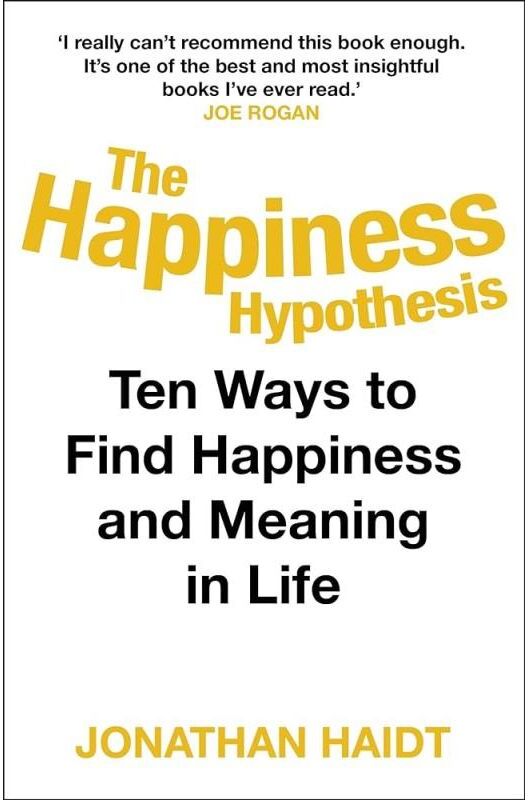
Cornerstone The Happiness Hypothesis: Ten Ways to Find Happiness and Meaning in LifeIn The Happiness Hypothesis, social psychologist Jonathan Haidt examines ten Great Ideas which have been championed across centuries and civilisations and asks: how can we apply these ideas to our twenty-first century lives?By holding ancient wisdom to the test of modern psychology, Haidt extracts lessons on how we can train our brains to be more optimistic, build better relationships and achieve a sense of balance. He also explores how we can overcome the obstacles to well-being that we place in our own way.In this uplifting and empowering book, Haidt draws on sources as diverse as Buddha, Benjamin Franklin and Shakespeare to show how we can find happiness and meaning in life10,99 £*Shipping: 2,99 £Secure redirect to the provider
-
What is the difference between Imparfait and Conditionnel présent?
The Imparfait is used to describe ongoing or repeated actions in the past, while the Conditionnel présent is used to express hypothetical or uncertain actions in the present or future. The Imparfait is used to set the scene or provide background information, while the Conditionnel présent is used to express a condition or consequence. Additionally, the Imparfait is formed by adding specific endings to the root of the verb, while the Conditionnel présent is formed by adding specific endings to the infinitive form of the verb. **
-
How do you translate the French imparfait into German?
To translate the French imparfait into German, you can use the German simple past tense (Präteritum) or the present perfect tense (Perfekt). The choice between the two depends on the context and the specific meaning you want to convey. The simple past tense is more commonly used in written German, while the present perfect tense is more common in spoken German. It's important to pay attention to the verb conjugations and the nuances of each tense to accurately convey the meaning of the imparfait in German. **
-
What is a task related to the French imparfait tense?
One task related to the French imparfait tense is to describe ongoing or habitual actions in the past. For example, students may be asked to write a paragraph about their daily routine when they were younger using the imparfait tense. Another task could be to narrate a past event or story using the imparfait to set the scene or provide background information. Practicing conjugating regular and irregular verbs in the imparfait form is also a common exercise to reinforce understanding of this past tense. **
-
Can someone help me with the imparfait and passé composé?
Yes, I can help you with the imparfait and passé composé. The imparfait is used to describe ongoing or repeated actions in the past, while the passé composé is used to describe completed actions in the past. Understanding when to use each tense depends on the context of the sentence and the specific action being described. If you have specific examples or questions, feel free to ask for clarification. **
* All prices are inclusive of VAT and, if applicable, plus shipping costs. The offer information is based on the details provided by the respective shop and is updated through automated processes. Real-time updates do not occur, so deviations can occur in individual cases. ** Note: Parts of this content were created by AI.