Buy momente.eu ?
We are moving the project
momente.eu .
Are you interested in purchasing the domain
momente.eu ?
domain@kv-gmbh.de · 0541-91531010
Buy momente.eu ?
Can you give a summary of Piaget?
Jean Piaget was a Swiss psychologist known for his work in child development and cognitive theory. He proposed that children go through four stages of cognitive development, from infancy to adolescence, and that they actively construct their understanding of the world through their experiences. Piaget's theory emphasizes the importance of play and exploration in a child's learning process, and he also highlighted the role of social interaction in cognitive development. His work has had a significant impact on the fields of psychology and education, and his ideas continue to influence our understanding of how children learn and grow. **
What is the difference between Kohlberg and Piaget?
Kohlberg and Piaget were both developmental psychologists who focused on cognitive development, but they studied different aspects of it. Piaget's theory of cognitive development focused on how children's thinking processes evolve as they grow, while Kohlberg's theory of moral development focused on how individuals' moral reasoning develops over time. Additionally, Piaget's stages of cognitive development are more concrete and focused on childhood, while Kohlberg's stages of moral development extend into adulthood and are more abstract. Overall, Piaget's theory is more about cognitive development in general, while Kohlberg's theory specifically addresses moral development. **


Similar search terms for Piaget
Top-Angebote
Products related to Piaget:
-
Dixit Expansion 6: Memories - 84 Illustrated Picture Cards for Family and Group Play, Ages 8+, by LibelludDixit Expansion 6: Memories is a set of 84 beautifully illustrated picture cards designed to inspire imaginative clues and unexpected interpretations. When combined with the Dixit base game, these cards create new storytelling possibilities. Players take turns choosing a card and giving a clue, while the other players select cards they think best match it. The aim is to choose a clue that is neither too obvious nor too obscure. This expansion is intended to be used with a Dixit base game and does not replace the core game components. It is suitable for family and group play, encouraging creativity, discussion, and visual interpretation. The cards are new artwork for expanding the Dixit card collection and are compatible with the Dixit base game.16,57 £*Shipping: 3,95 £Secure redirect to the provider
-
Hardie Grant Books The Spanish Home Kitchen by José Pizarro - Hardback Spanish Cookbook - 80+ Seasonal Recipes & Family Memories - Foodie GiftThe Spanish Home Kitchen by José Pizarro is a cookbook that gathers over 80 seasonal recipes from his family farm in Talaván and from all corners of Spain. This hardback edition combines evocative storytelling with achievable, authentic cooking, making it a valuable addition to any kitchen bookshelf. It's a book for cooks who want real Spanish flavor without the fuss, and for anyone who loves food with heart and history behind it. Chef José Pizarro grew up on a farming family's land in central-western Spain, where meals were built around whatever the season, the garden, and the farmyard provided. In The Spanish Home Kitchen, he returns to that childhood home to retell the recipes passed from his grandmother, to his mother, and eventually to him.19,99 £*Shipping: 2,99 £Secure redirect to the provider
-
Ravensburger Spidey ; His Amazing Friends 3x49pc Jigsaw Puzzle for Kids, Ages 4 and up, Encourages Teamwork and Family BondingUnleash fun with the Ravensburger Spidey; His Amazing Friends 3x49pc Jigsaw Puzzle. Perfect for little hands and big imaginations, this jigsaw puzzle features three colorful designs with beloved characters from the hit show. Each puzzle has 49 pieces, providing a delightful challenge that enhances problem-solving skills while ensuring entertainment. Crafted with high-quality materials, these puzzles are durable and long-lasting for hours of playtime. Your child will enjoy piecing together their favorite heroes, making it a great gift for birthdays, holidays, or any occasion. Three unique designs keep the excitement alive. Suitable for ages 4 and up, this puzzle is perfect for quiet time at home or friendly competitions with friends.5,99 £*Shipping: 3,95 £Secure redirect to the provider
-
Suavinéx Baby Cologne Memories UnisexA perfume. Premium fragrance featuring jasmine, orange blossom, and cedarwood. Low-alcohol formula: gentle on skin, won’t stain clothes. Versatile for babies and the entire family. Infused with nostalgia, Baby Cologne Memories transforms daily routines into cherished rituals. Its delicate, family-friendly scent ensures a touch of elegance for every moment.21,98 £*Shipping: 15,47 £Secure redirect to the provider




-
What did Jean Piaget mean by this statement?
Jean Piaget meant that children actively construct their understanding of the world through their experiences and interactions. He believed that children are not passive recipients of knowledge but rather actively engage with their environment to make sense of it. Piaget emphasized the importance of hands-on learning and exploration in the cognitive development of children. **
-
What did Jean Piaget mean by the statement?
Jean Piaget meant that children actively construct their understanding of the world through their experiences and interactions. He believed that children are not passive recipients of knowledge but rather engage in the process of learning by exploring, questioning, and experimenting. Piaget emphasized the importance of cognitive development and how children's thinking evolves as they grow and learn. This statement highlights the idea that children play an active role in shaping their own intellectual development. **
-
What does Jean Piaget mean with this statement?
Jean Piaget means that children are active learners who construct their understanding of the world through their experiences and interactions. He emphasizes the importance of hands-on experiences and exploration in the learning process, as children build their knowledge by actively engaging with their environment. This statement highlights the idea that children are not passive recipients of information, but rather active participants in their own learning and development. Piaget's theory of cognitive development suggests that children go through stages of mental growth as they interact with the world around them, constantly building and refining their understanding of concepts. **
-
What do Kohlberg and Piaget have in common?
Kohlberg and Piaget both focused on the development of moral reasoning and cognitive development in children. They both proposed stage theories to explain the progression of moral and cognitive development, with each stage building upon the previous one. Additionally, both theorists emphasized the role of social interactions and experiences in shaping children's moral and cognitive development. Overall, Kohlberg and Piaget shared a common interest in understanding the processes through which children develop their moral and cognitive abilities. **

What are the differences between Piaget and Kohlberg?
Piaget and Kohlberg were both influential developmental psychologists, but they focused on different aspects of human development. Piaget's theory of cognitive development focused on how children's thinking and understanding of the world changes as they grow, while Kohlberg's theory of moral development focused on how individuals' understanding of right and wrong evolves over time. Additionally, Piaget's stages of cognitive development are more focused on concrete cognitive abilities, while Kohlberg's stages of moral development are more focused on abstract moral reasoning. Overall, Piaget's work is more focused on cognitive development, while Kohlberg's work is more focused on moral development. **
What is the learning theory of Jean Piaget?
Jean Piaget's learning theory, known as constructivism, emphasizes the active role of the learner in constructing their own understanding of the world. Piaget believed that children go through stages of cognitive development, and that their understanding of the world is shaped by their experiences and interactions with their environment. He proposed that children learn through assimilation, where they incorporate new information into their existing mental structures, and accommodation, where they modify their existing mental structures to fit new information. Piaget's theory has had a significant impact on education, as it emphasizes the importance of hands-on, experiential learning and the need for educators to understand the cognitive development of their students. **
Top-Angebote
Products related to Piaget:
-
Aster The Unexpected Joy of Being Single: Locating unattached happiness by Catherine GrayHaving a secret single freak-out? Feeling the red, heart-shaped urgency intensify as the years roll on by? Oh hi! You're in the right place. Over half of Brits aged 25-44 are now single. It's become the norm to remain solo until much later in life, given the average marriage ages of 35 (women) and 38 (men). Many of us are choosing never to marry at all.But society, films, song lyrics and our parents are adamant that a happy ending has to be couple-shaped. That we're incomplete without an 'other half'*, like a bisected panto pony. Cue: single sorrow. Dating like it's a job. Spending half our lives waiting for somebody-we-fancy to text us back. Feeling haunted by the terms 'spinster' or 'confirmed bachelor.' Catherine Gray took a whole year off dating to find single satisfaction. She lifted the lid on the reasons behind the global single revolution, explored the bizarre ways cultures single-shame, detached from 'all the good ones are gone!' panic and debunked the myth that married people are much happier. Let's start the reverse brainwash, in order to locate - and luxuriate in - single happiness. Are you in?1,99 £*Shipping: 1,99 £Secure redirect to the provider
-
Youfap Market Educational Toy, Save The Penguin Ice Tapping Rescue Game, Fun Family Game For Parent Child Bonding Educational Toy, Save The Penguin Ice Tapping Rescue Game, Fun Family Game For Parent Child BondingEngage and Bond with the Save The Penguin Ice Tapping Rescue Game Looking for a fun and educational way to bond with your kids The Save The Penguin Ice Tapping Rescue Game is a perfect choice for quality parentchild bonding time. This interactive...49,97 $*Shipping: 0,00 $Secure redirect to the provider
-
Dixit Expansion 6: Memories - 84 Illustrated Picture Cards for Family and Group Play, Ages 8+, by LibelludDixit Expansion 6: Memories is a set of 84 beautifully illustrated picture cards designed to inspire imaginative clues and unexpected interpretations. When combined with the Dixit base game, these cards create new storytelling possibilities. Players take turns choosing a card and giving a clue, while the other players select cards they think best match it. The aim is to choose a clue that is neither too obvious nor too obscure. This expansion is intended to be used with a Dixit base game and does not replace the core game components. It is suitable for family and group play, encouraging creativity, discussion, and visual interpretation. The cards are new artwork for expanding the Dixit card collection and are compatible with the Dixit base game.16,57 £*Shipping: 3,95 £Secure redirect to the provider
-
Hardie Grant Books The Spanish Home Kitchen by José Pizarro - Hardback Spanish Cookbook - 80+ Seasonal Recipes & Family Memories - Foodie GiftThe Spanish Home Kitchen by José Pizarro is a cookbook that gathers over 80 seasonal recipes from his family farm in Talaván and from all corners of Spain. This hardback edition combines evocative storytelling with achievable, authentic cooking, making it a valuable addition to any kitchen bookshelf. It's a book for cooks who want real Spanish flavor without the fuss, and for anyone who loves food with heart and history behind it. Chef José Pizarro grew up on a farming family's land in central-western Spain, where meals were built around whatever the season, the garden, and the farmyard provided. In The Spanish Home Kitchen, he returns to that childhood home to retell the recipes passed from his grandmother, to his mother, and eventually to him.19,99 £*Shipping: 2,99 £Secure redirect to the provider
-
Can you give a summary of Piaget?
Jean Piaget was a Swiss psychologist known for his work in child development and cognitive theory. He proposed that children go through four stages of cognitive development, from infancy to adolescence, and that they actively construct their understanding of the world through their experiences. Piaget's theory emphasizes the importance of play and exploration in a child's learning process, and he also highlighted the role of social interaction in cognitive development. His work has had a significant impact on the fields of psychology and education, and his ideas continue to influence our understanding of how children learn and grow. **
-
What is the difference between Kohlberg and Piaget?
Kohlberg and Piaget were both developmental psychologists who focused on cognitive development, but they studied different aspects of it. Piaget's theory of cognitive development focused on how children's thinking processes evolve as they grow, while Kohlberg's theory of moral development focused on how individuals' moral reasoning develops over time. Additionally, Piaget's stages of cognitive development are more concrete and focused on childhood, while Kohlberg's stages of moral development extend into adulthood and are more abstract. Overall, Piaget's theory is more about cognitive development in general, while Kohlberg's theory specifically addresses moral development. **
-
What did Jean Piaget mean by this statement?
Jean Piaget meant that children actively construct their understanding of the world through their experiences and interactions. He believed that children are not passive recipients of knowledge but rather actively engage with their environment to make sense of it. Piaget emphasized the importance of hands-on learning and exploration in the cognitive development of children. **
-
What did Jean Piaget mean by the statement?
Jean Piaget meant that children actively construct their understanding of the world through their experiences and interactions. He believed that children are not passive recipients of knowledge but rather engage in the process of learning by exploring, questioning, and experimenting. Piaget emphasized the importance of cognitive development and how children's thinking evolves as they grow and learn. This statement highlights the idea that children play an active role in shaping their own intellectual development. **
Similar search terms for Piaget
-
Ravensburger Spidey ; His Amazing Friends 3x49pc Jigsaw Puzzle for Kids, Ages 4 and up, Encourages Teamwork and Family BondingUnleash fun with the Ravensburger Spidey; His Amazing Friends 3x49pc Jigsaw Puzzle. Perfect for little hands and big imaginations, this jigsaw puzzle features three colorful designs with beloved characters from the hit show. Each puzzle has 49 pieces, providing a delightful challenge that enhances problem-solving skills while ensuring entertainment. Crafted with high-quality materials, these puzzles are durable and long-lasting for hours of playtime. Your child will enjoy piecing together their favorite heroes, making it a great gift for birthdays, holidays, or any occasion. Three unique designs keep the excitement alive. Suitable for ages 4 and up, this puzzle is perfect for quiet time at home or friendly competitions with friends.5,99 £*Shipping: 3,95 £Secure redirect to the provider
-
Suavinéx Baby Cologne Memories UnisexA perfume. Premium fragrance featuring jasmine, orange blossom, and cedarwood. Low-alcohol formula: gentle on skin, won’t stain clothes. Versatile for babies and the entire family. Infused with nostalgia, Baby Cologne Memories transforms daily routines into cherished rituals. Its delicate, family-friendly scent ensures a touch of elegance for every moment.21,98 £*Shipping: 15,47 £Secure redirect to the provider
-
11-11: Memories Retold (PlayStation 4)11-11: Memories Retold for PlayStation 4 is a powerful narrative-driven adventure set during the First World War. Told through the interconnected stories of two soldiers on opposing sides of the conflict, the game explores themes of humanity, loss and remembrance. Featuring a distinctive painterly art style and an emotionally rich soundtrack, this PS4 title delivers a deeply moving interactive experience. Key Features Story-driven adventure set during World War I Two interwoven narratives offering different perspectives of the conflict Unique impressionist, painterly visual style Emotionally engaging soundtrack enhancing the narrative tone Focus on exploration, storytelling and player choice Thought-provoking themes centred on memory and humanity Benefits 11-11: Memories Retold offers a meaningful and reflective gaming experience that goes beyond traditional action gameplay. Its emotionally charged storytelling and artistic presentation make it ideal for players who appreciate narrative depth and historical themes. The game provides a respectful and engaging way to explore the human stories behind World War I. Specifications Feature Details Product Title 11-11: Memories Retold Platform Sony PlayStation 4 Genre Adventure / Narrative Game Mode Single-player Edition Standard Edition Media Blu-ray Disc PEGI Rating PEGI 12 Publisher Bandai Namco Entertainment Release Format Physical Disc Ideal for players who enjoy story-focused games, artistic presentation and historically inspired narratives. Perfect for those looking for a thoughtful, emotionally engaging single-player experience on PS4.19,89 £*Shipping: 0,00 £Secure redirect to the provider
-
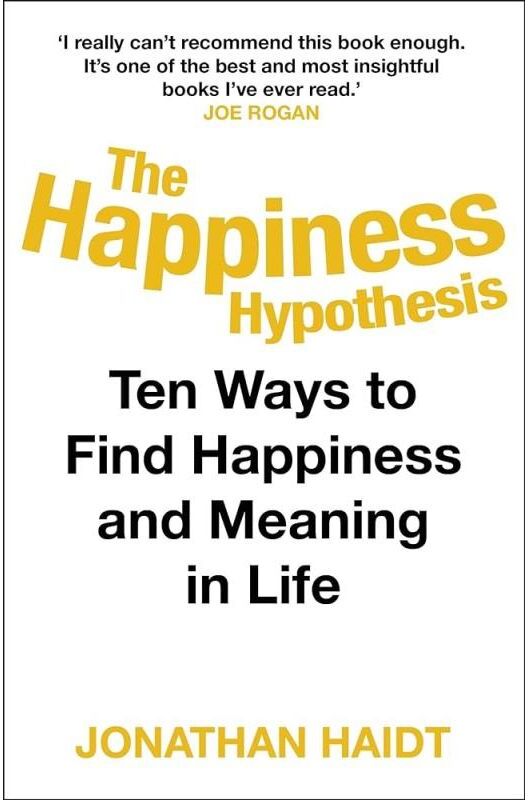
Cornerstone The Happiness Hypothesis: Ten Ways to Find Happiness and Meaning in LifeIn The Happiness Hypothesis, social psychologist Jonathan Haidt examines ten Great Ideas which have been championed across centuries and civilisations and asks: how can we apply these ideas to our twenty-first century lives?By holding ancient wisdom to the test of modern psychology, Haidt extracts lessons on how we can train our brains to be more optimistic, build better relationships and achieve a sense of balance. He also explores how we can overcome the obstacles to well-being that we place in our own way.In this uplifting and empowering book, Haidt draws on sources as diverse as Buddha, Benjamin Franklin and Shakespeare to show how we can find happiness and meaning in life10,99 £*Shipping: 2,99 £Secure redirect to the provider
-
What does Jean Piaget mean with this statement?
Jean Piaget means that children are active learners who construct their understanding of the world through their experiences and interactions. He emphasizes the importance of hands-on experiences and exploration in the learning process, as children build their knowledge by actively engaging with their environment. This statement highlights the idea that children are not passive recipients of information, but rather active participants in their own learning and development. Piaget's theory of cognitive development suggests that children go through stages of mental growth as they interact with the world around them, constantly building and refining their understanding of concepts. **
-
What do Kohlberg and Piaget have in common?
Kohlberg and Piaget both focused on the development of moral reasoning and cognitive development in children. They both proposed stage theories to explain the progression of moral and cognitive development, with each stage building upon the previous one. Additionally, both theorists emphasized the role of social interactions and experiences in shaping children's moral and cognitive development. Overall, Kohlberg and Piaget shared a common interest in understanding the processes through which children develop their moral and cognitive abilities. **
-
What are the differences between Piaget and Kohlberg?
Piaget and Kohlberg were both influential developmental psychologists, but they focused on different aspects of human development. Piaget's theory of cognitive development focused on how children's thinking and understanding of the world changes as they grow, while Kohlberg's theory of moral development focused on how individuals' understanding of right and wrong evolves over time. Additionally, Piaget's stages of cognitive development are more focused on concrete cognitive abilities, while Kohlberg's stages of moral development are more focused on abstract moral reasoning. Overall, Piaget's work is more focused on cognitive development, while Kohlberg's work is more focused on moral development. **
-
What is the learning theory of Jean Piaget?
Jean Piaget's learning theory, known as constructivism, emphasizes the active role of the learner in constructing their own understanding of the world. Piaget believed that children go through stages of cognitive development, and that their understanding of the world is shaped by their experiences and interactions with their environment. He proposed that children learn through assimilation, where they incorporate new information into their existing mental structures, and accommodation, where they modify their existing mental structures to fit new information. Piaget's theory has had a significant impact on education, as it emphasizes the importance of hands-on, experiential learning and the need for educators to understand the cognitive development of their students. **
* All prices are inclusive of VAT and, if applicable, plus shipping costs. The offer information is based on the details provided by the respective shop and is updated through automated processes. Real-time updates do not occur, so deviations can occur in individual cases. ** Note: Parts of this content were created by AI.