Buy momente.eu ?
We are moving the project
momente.eu .
Are you interested in purchasing the domain
momente.eu ?
domain@kv-gmbh.de · 0541-91531010
Buy momente.eu ?
When is "arriver" and when is "venir" used?
"Arriver" is used to indicate the arrival of someone or something at a specific location, while "venir" is used to indicate the act of coming to a specific location. "Arriver" is often used to describe the arrival of a person or thing at a destination, while "venir" is used to describe the action of coming from one place to another. In general, "arriver" is used to describe the end point of a journey, while "venir" is used to describe the beginning of a journey. **
Why does venir become venues in the participe passé?
Venir becomes venues in the participe passé because it is an irregular verb in French. The past participle of venir is formed by adding -u for the singular masculine form, -ue for the singular feminine form, -us for the plural masculine form, and -ues for the plural feminine form. Therefore, the past participle of venir is venu for the singular masculine form, venue for the singular feminine form, venus for the plural masculine form, and venues for the plural feminine form. **

Similar search terms for Venir
Top-Angebote
Products related to Venir:
-
Aster The Unexpected Joy of Being Single: Locating unattached happiness by Catherine GrayHaving a secret single freak-out? Feeling the red, heart-shaped urgency intensify as the years roll on by? Oh hi! You're in the right place. Over half of Brits aged 25-44 are now single. It's become the norm to remain solo until much later in life, given the average marriage ages of 35 (women) and 38 (men). Many of us are choosing never to marry at all.But society, films, song lyrics and our parents are adamant that a happy ending has to be couple-shaped. That we're incomplete without an 'other half'*, like a bisected panto pony. Cue: single sorrow. Dating like it's a job. Spending half our lives waiting for somebody-we-fancy to text us back. Feeling haunted by the terms 'spinster' or 'confirmed bachelor.' Catherine Gray took a whole year off dating to find single satisfaction. She lifted the lid on the reasons behind the global single revolution, explored the bizarre ways cultures single-shame, detached from 'all the good ones are gone!' panic and debunked the myth that married people are much happier. Let's start the reverse brainwash, in order to locate - and luxuriate in - single happiness. Are you in?1,99 £*Shipping: 1,99 £Secure redirect to the provider
-
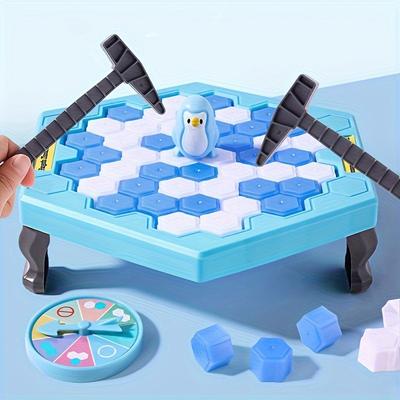
Youfap Market Educational Toy, Save The Penguin Ice Tapping Rescue Game, Fun Family Game For Parent Child Bonding Educational Toy, Save The Penguin Ice Tapping Rescue Game, Fun Family Game For Parent Child BondingEngage and Bond with the Save The Penguin Ice Tapping Rescue Game Looking for a fun and educational way to bond with your kids The Save The Penguin Ice Tapping Rescue Game is a perfect choice for quality parentchild bonding time. This interactive...49,97 $*Shipping: 0,00 $Secure redirect to the provider
-
Hardie Grant Books The Spanish Home Kitchen by José Pizarro - Hardback Spanish Cookbook - 80+ Seasonal Recipes & Family Memories - Foodie GiftThe Spanish Home Kitchen by José Pizarro is a cookbook that gathers over 80 seasonal recipes from his family farm in Talaván and from all corners of Spain. This hardback edition combines evocative storytelling with achievable, authentic cooking, making it a valuable addition to any kitchen bookshelf. It's a book for cooks who want real Spanish flavor without the fuss, and for anyone who loves food with heart and history behind it. Chef José Pizarro grew up on a farming family's land in central-western Spain, where meals were built around whatever the season, the garden, and the farmyard provided. In The Spanish Home Kitchen, he returns to that childhood home to retell the recipes passed from his grandmother, to his mother, and eventually to him.19,99 £*Shipping: 2,99 £Secure redirect to the provider



-
What is the difference in the use of ir and venir?
The main difference between the use of "ir" and "venir" in Spanish is that "ir" is used to indicate movement towards a location, while "venir" is used to indicate movement towards the speaker's location. For example, "voy al parque" means "I am going to the park," indicating movement away from the speaker, while "vienes a mi casa" means "you are coming to my house," indicating movement towards the speaker. Additionally, "ir" is an irregular verb and its conjugation changes depending on the subject, while "venir" is a regular -ir verb and follows a more predictable conjugation pattern. **
-
How do you form "venir de faire" and "être en train de faire"?
"Venir de faire" is formed by conjugating the verb "venir" in the present tense followed by the preposition "de" and the infinitive of the verb you want to express has just been done. For example, "Je viens de manger" means "I have just eaten." "Être en train de faire" is formed by conjugating the verb "être" in the present tense followed by the preposition "en train de" and the infinitive of the verb you want to express is currently being done. For example, "Je suis en train de manger" means "I am currently eating." **
-
What is the difference between "être en train" and "venir de faire" in English?
"Être en train" is used to express that someone is in the process of doing something, while "venir de faire" is used to indicate that someone has just finished doing something. For example, "Je suis en train de manger" means "I am in the process of eating," while "Je viens de manger" means "I have just eaten." Both expressions are used to talk about actions in progress or recently completed, but they convey different time frames. **
-
What are the exceptions for using the subjunctive with the verbs venir, boire, and prendre?
The verbs venir, boire, and prendre do not typically trigger the use of the subjunctive mood in French. However, they can be followed by the subjunctive in certain situations, such as when expressing doubt, uncertainty, or desire. In these cases, the subjunctive is used to convey a sense of subjectivity or unreality in the sentence. **


What are the conjugations for the Spanish verbs ir (to go) and venir (to come)?
The conjugations for the Spanish verb "ir" (to go) are: - Yo voy (I go) - Tú vas (you go) - Él/ella/usted va (he/she/you go) - Nosotros/nosotras vamos (we go) - Vosotros/vosotras vais (you all go) - Ellos/ellas/ustedes van (they/you all go) The conjugations for the Spanish verb "venir" (to come) are: - Yo vengo (I come) - Tú vienes (you come) - Él/ella/usted viene (he/she/you come) - Nosotros/nosotras venimos (we come) - Vosotros/vosotras venís (you all come) - Ellos/ellas/ustedes vienen (they/you all come) **
What is a family celebration?
A family celebration is a special event or occasion that brings together family members to commemorate and enjoy a significant moment or milestone. It can include birthdays, weddings, anniversaries, graduations, holidays, and other important moments in the family's life. Family celebrations often involve traditions, rituals, and activities that are meaningful to the family, and they provide an opportunity for bonding, creating memories, and strengthening the family's connections. These gatherings are a time for joy, love, and togetherness, and they often involve sharing meals, exchanging gifts, and participating in various festivities. **
Top-Angebote
Products related to Venir:
-
Uplift Curations Tarde Porque No Queria Venir Cartoon Enamel Pin Funny Spanish Cat Brooch For Lapel, Backpack, Badge Jewelry Gift design dShow off your playful personality with this quirky cartoon enamel pin, featuring a humorous Tarde Porque No Queria Venir Spanish cat design thats sure to spark laughs. Perfect for cat lovers and fans of funny accessories, this funny lapel badge adds...40,00 $*Shipping: 0,00 $Secure redirect to the provider
-
Aster The Unexpected Joy of Being Single: Locating unattached happiness by Catherine GrayHaving a secret single freak-out? Feeling the red, heart-shaped urgency intensify as the years roll on by? Oh hi! You're in the right place. Over half of Brits aged 25-44 are now single. It's become the norm to remain solo until much later in life, given the average marriage ages of 35 (women) and 38 (men). Many of us are choosing never to marry at all.But society, films, song lyrics and our parents are adamant that a happy ending has to be couple-shaped. That we're incomplete without an 'other half'*, like a bisected panto pony. Cue: single sorrow. Dating like it's a job. Spending half our lives waiting for somebody-we-fancy to text us back. Feeling haunted by the terms 'spinster' or 'confirmed bachelor.' Catherine Gray took a whole year off dating to find single satisfaction. She lifted the lid on the reasons behind the global single revolution, explored the bizarre ways cultures single-shame, detached from 'all the good ones are gone!' panic and debunked the myth that married people are much happier. Let's start the reverse brainwash, in order to locate - and luxuriate in - single happiness. Are you in?1,99 £*Shipping: 1,99 £Secure redirect to the provider
-
When is "arriver" and when is "venir" used?
"Arriver" is used to indicate the arrival of someone or something at a specific location, while "venir" is used to indicate the act of coming to a specific location. "Arriver" is often used to describe the arrival of a person or thing at a destination, while "venir" is used to describe the action of coming from one place to another. In general, "arriver" is used to describe the end point of a journey, while "venir" is used to describe the beginning of a journey. **
-
Why does venir become venues in the participe passé?
Venir becomes venues in the participe passé because it is an irregular verb in French. The past participle of venir is formed by adding -u for the singular masculine form, -ue for the singular feminine form, -us for the plural masculine form, and -ues for the plural feminine form. Therefore, the past participle of venir is venu for the singular masculine form, venue for the singular feminine form, venus for the plural masculine form, and venues for the plural feminine form. **
-
What is the difference in the use of ir and venir?
The main difference between the use of "ir" and "venir" in Spanish is that "ir" is used to indicate movement towards a location, while "venir" is used to indicate movement towards the speaker's location. For example, "voy al parque" means "I am going to the park," indicating movement away from the speaker, while "vienes a mi casa" means "you are coming to my house," indicating movement towards the speaker. Additionally, "ir" is an irregular verb and its conjugation changes depending on the subject, while "venir" is a regular -ir verb and follows a more predictable conjugation pattern. **
-
How do you form "venir de faire" and "être en train de faire"?
"Venir de faire" is formed by conjugating the verb "venir" in the present tense followed by the preposition "de" and the infinitive of the verb you want to express has just been done. For example, "Je viens de manger" means "I have just eaten." "Être en train de faire" is formed by conjugating the verb "être" in the present tense followed by the preposition "en train de" and the infinitive of the verb you want to express is currently being done. For example, "Je suis en train de manger" means "I am currently eating." **
Similar search terms for Venir
-
Youfap Market Educational Toy, Save The Penguin Ice Tapping Rescue Game, Fun Family Game For Parent Child Bonding Educational Toy, Save The Penguin Ice Tapping Rescue Game, Fun Family Game For Parent Child BondingEngage and Bond with the Save The Penguin Ice Tapping Rescue Game Looking for a fun and educational way to bond with your kids The Save The Penguin Ice Tapping Rescue Game is a perfect choice for quality parentchild bonding time. This interactive...49,97 $*Shipping: 0,00 $Secure redirect to the provider
-
Hardie Grant Books The Spanish Home Kitchen by José Pizarro - Hardback Spanish Cookbook - 80+ Seasonal Recipes & Family Memories - Foodie GiftThe Spanish Home Kitchen by José Pizarro is a cookbook that gathers over 80 seasonal recipes from his family farm in Talaván and from all corners of Spain. This hardback edition combines evocative storytelling with achievable, authentic cooking, making it a valuable addition to any kitchen bookshelf. It's a book for cooks who want real Spanish flavor without the fuss, and for anyone who loves food with heart and history behind it. Chef José Pizarro grew up on a farming family's land in central-western Spain, where meals were built around whatever the season, the garden, and the farmyard provided. In The Spanish Home Kitchen, he returns to that childhood home to retell the recipes passed from his grandmother, to his mother, and eventually to him.19,99 £*Shipping: 2,99 £Secure redirect to the provider
-
Uplift Curations Tarde Porque No Queria Venir Cartoon Enamel Pin Funny Spanish Cat Brooch For Lapel, Backpack, Badge Jewelry Gift design eShow off your playful personality with this quirky cartoon enamel pin, featuring a humorous Tarde Porque No Queria Venir Spanish cat design thats sure to spark laughs. Perfect for cat lovers and fans of funny accessories, this funny lapel badge adds...40,00 $*Shipping: 0,00 $Secure redirect to the provider
-
Uplift Curations Tarde Porque No Queria Venir Cartoon Enamel Pin Funny Spanish Cat Brooch For Lapel, Backpack, Badge Jewelry Gift design cShow off your playful personality with this quirky cartoon enamel pin, featuring a humorous Tarde Porque No Queria Venir Spanish cat design thats sure to spark laughs. Perfect for cat lovers and fans of funny accessories, this funny lapel badge adds...40,00 $*Shipping: 0,00 $Secure redirect to the provider
-
What is the difference between "être en train" and "venir de faire" in English?
"Être en train" is used to express that someone is in the process of doing something, while "venir de faire" is used to indicate that someone has just finished doing something. For example, "Je suis en train de manger" means "I am in the process of eating," while "Je viens de manger" means "I have just eaten." Both expressions are used to talk about actions in progress or recently completed, but they convey different time frames. **
-
What are the exceptions for using the subjunctive with the verbs venir, boire, and prendre?
The verbs venir, boire, and prendre do not typically trigger the use of the subjunctive mood in French. However, they can be followed by the subjunctive in certain situations, such as when expressing doubt, uncertainty, or desire. In these cases, the subjunctive is used to convey a sense of subjectivity or unreality in the sentence. **
-
What are the conjugations for the Spanish verbs ir (to go) and venir (to come)?
The conjugations for the Spanish verb "ir" (to go) are: - Yo voy (I go) - Tú vas (you go) - Él/ella/usted va (he/she/you go) - Nosotros/nosotras vamos (we go) - Vosotros/vosotras vais (you all go) - Ellos/ellas/ustedes van (they/you all go) The conjugations for the Spanish verb "venir" (to come) are: - Yo vengo (I come) - Tú vienes (you come) - Él/ella/usted viene (he/she/you come) - Nosotros/nosotras venimos (we come) - Vosotros/vosotras venís (you all come) - Ellos/ellas/ustedes vienen (they/you all come) **
-
What is a family celebration?
A family celebration is a special event or occasion that brings together family members to commemorate and enjoy a significant moment or milestone. It can include birthdays, weddings, anniversaries, graduations, holidays, and other important moments in the family's life. Family celebrations often involve traditions, rituals, and activities that are meaningful to the family, and they provide an opportunity for bonding, creating memories, and strengthening the family's connections. These gatherings are a time for joy, love, and togetherness, and they often involve sharing meals, exchanging gifts, and participating in various festivities. **
* All prices are inclusive of VAT and, if applicable, plus shipping costs. The offer information is based on the details provided by the respective shop and is updated through automated processes. Real-time updates do not occur, so deviations can occur in individual cases. ** Note: Parts of this content were created by AI.